
The essential difference in material and anti-corrosion principle
The base material of hot-dip galvanized screws is carbon steel or iron screws, and their anti-corrosion relies on "external coating protection". During production, carbon steel screws are immersed in molten zinc liquid, and through physical adsorption and chemical reactions, a uniform zinc coating of a certain thickness is formed on the surface of the screws. The anti-corrosion principle is sacrificial anode protection - zinc has a higher chemical activity than iron, and in a corrosive environment, the zinc layer will be oxidized and corroded first, thereby isolating the contact between air, moisture and the base material. Even if the zinc layer is partially damaged, the surrounding zinc can still continue to protect the damaged carbon steel base material, preventing rust from spreading.
The base material of stainless steel screws is stainless steel containing chromium, nickel and other alloy elements, and their anti-corrosion relies on "the material's own passivation film protection". The chromium element in stainless steel reacts with oxygen in the air, forming a thin and dense oxide chromium passivation film on the surface of the screws. This film can firmly adhere to the base material surface, blocking the contact between corrosive media and the steel. Once the passivation film is damaged, it can quickly self-repair in an oxygen environment, belonging to "intrinsic anti-corrosion", without the need for additional coating.
The difference in anti-corrosion performance and applicable environments
Hot-dip galvanized screws have strong anti-corrosion ability and can withstand harsh environments, especially suitable for long-term exposure to outdoor, damp soil, industrial acid and alkali mist, salt fog and other strong corrosive scenarios. The thicker the zinc layer, the longer the anti-corrosion life. Conventional hot-dip galvanized screws can remain free from rust in outdoor sun and rain environments for 10 to 20 years; products with thicker zinc layers can even last for more than 30 years. However, its drawback is poor heat resistance. When the environmental temperature exceeds 200℃, the zinc layer will gradually oxidize and flake off, losing its anti-corrosion effect.
The anti-corrosion performance of stainless steel screws depends on the grade, and they are more suitable for moderate corrosive environments. 304 stainless steel screws can withstand indoor dampness, daily freshwater, and mild industrial exhaust gases, but in coastal high-salt fog, strong acid and alkali environments, point corrosion may still occur; 316 stainless steel, due to the addition of molybdenum, has significantly improved salt fog and acid-base resistance, and can be used in coastal and chemical workshop scenarios, but its anti-corrosion life is still not as long as hot-dip galvanized screws. However, stainless steel's heat resistance is far superior to hot-dip galvanized, 304 stainless steel can withstand temperatures of around 600℃, and 316 stainless steel has higher heat resistance, with better structural stability in high-temperature environments.
The difference in mechanical properties and processing characteristics
The base material of hot-dip galvanized screws is carbon steel, with obvious strength advantages. It can achieve high-grade strength through heat treatment and is mostly coated with hot-dip galvanizing to meet the fastening requirements of heavy structures such as building facades, bridge supports, and power towers. However, the zinc layer is brittle, and if subjected to violent bending or tapping during processing or installation, it is prone to peeling off; and the high-temperature process during galvanizing will slightly affect the toughness of some high-strength screws, requiring strict control of the galvanizing process.
The strength of stainless steel screws is generally lower than that of the same specification carbon steel screws. However, stainless steel has better toughness and fatigue resistance, and is less prone to brittle fracture in repeated disassembly and vibration conditions. At the same time, the surface of stainless steel screws is smooth, without a coating, and there will be no problem of coating detachment during processing. They can be directly tapped, welded (note that welding may damage the passivation film, and after welding, re-passivation treatment is required), and the installation friction is more stable, less prone to slipping.
The difference in appearance and additional features
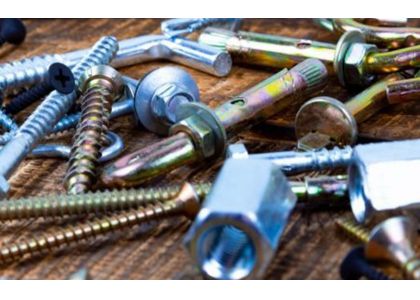
In terms of appearance, hot-dip galvanized screws present a uniform silver-gray matte texture, with possible slight zinc flakes on the surface, visually appearing more substantial; after long-term use, the zinc layer corrosion will produce white rust, gradually turning to brownish-red rust (the base material rusts). Stainless steel screws have a bright silver or matte metallic texture, with a smooth and tidy surface. 304 stainless steel has a soft luster, and 316 stainless steel has a slightly darker luster; they do not change color during use, and even if there is slight point corrosion, they will not rust through in large areas like carbon steel.
In terms of additional features, the zinc coating of hot-dip galvanized screws has good conductivity and is the preferred choice for grounding projects. It can effectively conduct electricity and prevent static electricity accumulation. Stainless steel screws have poor conductivity and are not suitable as grounding connectors. Additionally, stainless steel screws are clean and hygienic, without the risk of heavy metal leaching, and can be used in scenarios with high hygiene requirements such as food machinery, medical devices, and kitchen and bathroom equipment. If the zinc coating of hot-dip galvanized screws is damaged, zinc ions may be released, and they are not suitable for environments in contact with food or drinking water.

 1
1