
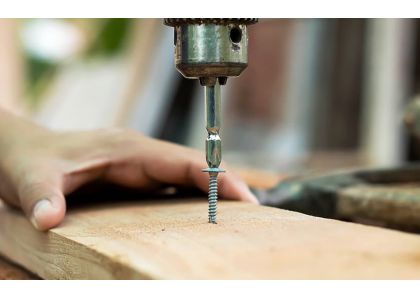
As an indispensable fastener in mechanical equipment, building structures and daily necessities, the rust prevention problem of screws is directly related to the service life and safety of products.
Principle and harm of screw rust
Screw rust is essentially an electrochemical reaction. When an iron screw is exposed to moisture, iron atoms react with oxygen and water molecules to form iron oxide (aka rust). This process can gradually erode the screws, leading to the following problems:
Reduced mechanical properties: Rust can weaken the strength and toughness of the screw and increase the risk of breakage
Difficult to remove: corrosion will deform the thread, resulting in slippage or stuck during disassembly
Aesthetic damage: rust will affect the appearance of the product and reduce the overall quality
Changes in electrical conductivity: For electronic devices, corrosion may alter electrical conductivity
Six effective methods of screw rust prevention
Surface treatment technology
Electroplating treatment: through electroplating zinc, nickel, chromium and other metals to form a protective layer. Galvanized screws (including white zinc, color zinc, etc.) are the most common anti-rust treatment, low cost and good effect. Nickel-plated screws have better corrosion resistance and aesthetics.
Dacromet treatment: A chromium-free zinc-aluminum coating technology, rust resistance is 7-10 times that of ordinary galvanized, especially suitable for cars, Bridges and other harsh environments.
Phosphating treatment: the formation of phosphate protective film on the surface of the screw, often as a pretreatment before coating, can significantly improve the adhesion of the subsequent coating.
Material selection strategy
Stainless steel screws: 304 stainless steel is suitable for general environment, 316 stainless steel has stronger acid and alkali resistance and salt spray resistance performance, suitable for coastal areas or chemical plants.
Copper/aluminum alloy screws: although more expensive, they perform well in special environments, such as ships, chemical equipment, etc.
Titanium screws: aerospace grade rust resistant material, almost non-corrosive but expensive.
Sealing and isolation measures
Use sealant: apply the thread sealant when the screw is installed, which can prevent loose and isolate air and moisture.
Rubber/plastic gasket: add an elastic gasket between the screw head and the fixed part to form a physical isolation layer.
Grease protection: regularly apply antirust grease (such as lithium grease) or petroleum jelly, especially for parts that are not often removed.
Environmental control method
Humidity management: Keep relative humidity below 60% when stored in the warehouse. Dehumidifier or desiccants can be used.
Avoid contact with corrosive media: try to keep the screw away from acid, alkali, salt and other substances. In special environments such as chemical plants, the corresponding corrosion resistant materials should be selected.
Ventilation design: For closed structures, ventilation hole design should be considered to avoid condensate accumulation.
Regular maintenance system
Inspection cycle: A full inspection is recommended every 3-6 months, and should be shortened to 1-3 months in coastal areas or high humidity environments.
Cleaning method: When slight rust is found, rust prevention oil can be applied immediately after cleaning with steel wire brush. Stubborn rust requires the use of special rust remover.
Replacement standard: when the screw thread damage exceeds 30% or diameter corrosion reduction exceeds 10%, it must be replaced immediately.
Special environment solutions
Marine environment: 316 stainless steel or hot dip galvanized screws with cathodic protection technology are recommended.
High temperature environment: Choose high temperature resistant coating (such as aluminum coating) or nickel-based alloy materials.

 1
1