
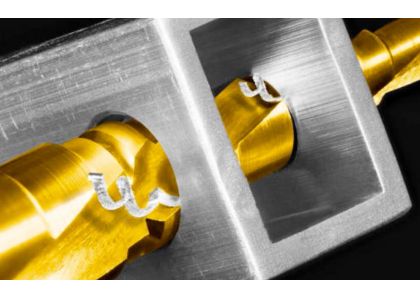
In the modern manufacturing system, although fasteners seem to be small, they play a vital role in structural safety and performance. Among many fastener materials, titanium alloy screws are gradually becoming the first choice for aviation, aerospace, ocean engineering and high-end equipment manufacturing because of their excellent comprehensive performance.
1. Material characteristics and structural advantages of titanium alloy screws
Titanium alloy is a kind of high temperature resistance, high strength metal material formed by adding aluminum, molybdenum, vanadium and other elements with titanium as the matrix. Its most prominent advantage lies in the balance of high strength and light weight. Compared with ordinary steel, the density of titanium alloy is only about 60% of steel at the same strength, which means that the weight can be significantly reduced under the premise of ensuring structural safety.
This lightweight advantage is especially important in aviation applications, where reducing dead weight not only improves the fuel efficiency of aircraft, but also improves maneuverability. Titanium alloy screw is the use of this characteristic, in the body, engine, landing gear fixed and other key parts play an irreplaceable role.
2.The strength and corrosion resistance of the double protection
The strength performance of titanium alloy screws is not only reflected in the static load bearing force, but more importantly, the long-term stability under complex working conditions. The tensile strength of titanium can reach more than 900 MPa, which enables titanium alloy screws to maintain structural stability in high stress and high vibration environments.
In addition, titanium metal has extremely strong corrosion resistance, the surface will produce a dense oxide film, effectively blocking the erosion of seawater and acid environment on the metal. This feature is very popular in Marine engineering and chemical equipment, and it is also a requirement that aviation equipment must meet - the aircraft faces the challenge of humidity, temperature difference and air chemical corrosion at high altitude. The corrosion resistance of titanium alloy screws can significantly prolong the service life of components, reduce the frequency of maintenance and replacement costs.
3. the value of titanium alloy screws in aviation applications
In the aviation field, the optimization of each gram of weight is related to the overall performance of the aircraft and the operation cost. The value of titanium alloy screws in aviation applications is mainly reflected in the following aspects:
Structural weight reduction: screw joints occupy a quantitative advantage in the body. Titanium alloy screws can effectively reduce the overall structural weight and improve fuel economy.
High temperature tolerance: titanium alloy can still maintain stable mechanical properties above 400℃, which is particularly important for the screws installed in the engine and hot area.
Fatigue resistance: under alternating load for a long time, titanium alloy screws can delay the generation and expansion of fatigue cracks.
Corrosion resistance: for naval aviation and models serving in high humidity environments, corrosion resistance directly affects safety and life.
4.Future trends and application extension
With the continuous development of new generation aircraft, high-speed railway and deep-sea detection equipment, the demand for titanium alloy screws will continue to grow. Lightweight and corrosion resistance will still be the core direction, but at the technical level, surface coating, composite material combination and other innovations are also promoted, such as through special surface treatment to improve the wear resistance and resistance to sticking of titanium alloy screws, making it more suitable for high-frequency disassembly and complex environment applications.

 1
1