
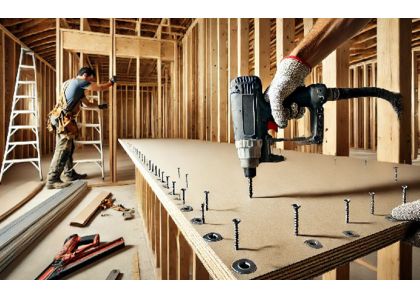
What are self-drilling screws
Self-drilling screws, also known as dovetail screws, are a type of wood screws. Self-drilling screws are screws with a self-drilling point at the front end. Depending on the shape of the head, they can be classified as: round head / pozi head / cross head / torx head, countersunk flat head / pozi head / cross head / torx head, hex stud, round stud (large flat head), bugle head, etc.
What are self-tapping screws
Self-tapping screws are a type of threaded fastener that drills the corresponding internal threads in the pre-drilled holes in metal or non-metal materials. Self-tapping screws do not require a nut with internal threads and drill the internal threads while being screwed in. Screws like triangular tooth self-tapping screws, high and low pressure self-tapping screws, etc. all belong to self-tapping screws.
The relationship between self-drilling screws and self-tapping screws
Self-drilling screws are definitely self-tapping self-drilling screws, also known as self-drilling screws, because they have self-drilling point, so they are also called self-drilling screws. While self-tapping screws are not necessarily self-tapping self-drilling screws. Usually, the self-tapping screws we refer to are those that require pre-drilled holes.
Difference between self-tapping screws and self-drilling screws
Self-tapping screws and self-drilling screws both have threads and can self-drill. However, they are different and have the following differences:
Shape difference
The lower part of the countersunk screw's thread has a flat tail similar to a drill bit, which is called a milling tail in professional terms. The thread of self-tapping screws does not have a tail and is a plain thread.
Usage difference
Self-tapping screws are used on non-metal or relatively soft metals (such as color steel plates) and other materials with low hardness. They can drill, squeeze, press, or attack the fixed material on the fixed material with their own threads, making them fit each other closely. While countersunk screws are mainly used on light steel structures and can drill through thin steel plates. Their application range is wider than self-tapping screws in buildings such as steel structure factories and other structures.
Usage difference
Self-tapping screws often have a pointed head and no drilling point. Before driving them in, a pre-drilled hole needs to be made on the object using an electric drill or a hand drill, and then the self-tapping screw can be driven in. While self-drilling screws have a drilling point, when being screwed into steel plates, wood, etc., there is no need to make a pre-drilled hole. The drilling point of the screw acts as a drill bit when being driven in, and the drilling and screw driving are completed simultaneously.

 1
1