
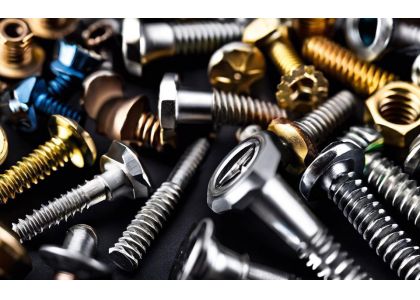
As a basic component for connecting and fixing various structures, screws play an important role in many fields such as industry, construction, furniture manufacturing and so on. There are many kinds of screw materials, and each material has its own unique advantages and disadvantages.
Stainless steel screw
Advantages
Corrosion resistance: Stainless steel screws have excellent corrosion resistance, suitable for use in humid or chemically corrosive environments.
High strength: stainless steel screws usually have high strength and hardness, suitable for heavy load applications.
Aesthetic: stainless steel screw appearance bright, not easy to rust, suitable for the need for beautiful appearance of products.
Disadvantages
Higher cost: The cost of stainless steel screws is higher compared to other materials.
Processing difficulty: stainless steel material is hard, processing and manufacturing process is more complex.
Carbon steel screw
Advantages
Low cost: the production cost of carbon steel screws is low and the price is relatively cheap.
Easy processing: carbon steel material is soft, easy to process and manufacture.
Disadvantages
Poor corrosion resistance: carbon steel screws are easy to rust and are not suitable for use in humid environments.
Lower strength: Compared to stainless steel, carbon steel screws have lower strength and hardness.
Brass screw
Advantages
Good electrical conductivity: Copper screws have good electrical conductivity and are suitable for electrical connections.
Corrosion resistance: Copper screws have better corrosion resistance than carbon steel, but not as good as stainless steel.
Disadvantages
Higher cost: The cost of copper screws is higher than carbon steel, but lower than stainless steel.
General strength: the strength of the copper screw is moderate, not suitable for bearing too much load.
Aluminum screw
Advantages
Lightweight: Aluminum screws are lightweight and suitable for applications that require weight reduction.
Good thermal conductivity: Aluminum screws have good thermal conductivity, suitable for products with high heat dissipation requirements.
Disadvantages
Low strength: Aluminum screws have low strength and are not suitable for bearing large loads.
Corrosion resistance is general: the corrosion resistance of aluminum screws is not as good as stainless steel and copper screws.
Plastic screw
Advantages
Insulation: Plastic screws have good insulation properties and are suitable for applications with high electrical insulation requirements.
Self-lubricating: some plastic screws have self-lubricating properties to reduce friction.
Disadvantages
Poor temperature resistance: plastic screws are easy to deform or melt at high temperatures.
Limited carrying capacity: Plastic screws have limited carrying capacity and are not suitable for heavy load applications.
When choosing screw material, it needs to be decided according to the specific requirements of the application scenario. For example, if the environment is humid or chemically corrosive, stainless steel screws may be the best choice. If cost is the main consideration, carbon steel screws may be more appropriate. Each material has its application, and understanding their advantages and disadvantages can help us make a more appropriate choice.

 1
1