
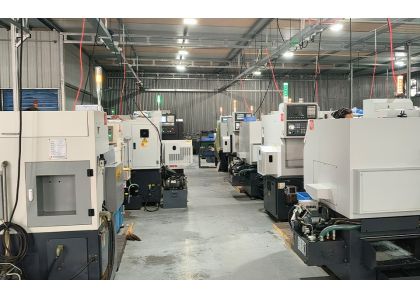
Manufacturing process of titanium alloy screw
Raw material preparation
Raw material selection: the selection of appropriate titanium alloy material is the key to ensure product quality. Commonly used titanium alloys are pure titanium, titanium aluminum alloy, titanium palladium alloy, etc., the specific choice needs to be decided according to the product use and performance requirements.
Process of production
Chain making and heat treatment: the production of titanium alloy screws generally goes through raw material selection, chain making, heat treatment, surface treatment and other links. Heat treatment includes solution treatment and aging treatment, through these steps can improve the mechanical properties and structure of titanium screws, improve its strength and hardness.
Surface treatment: Surface treatment can increase the corrosion resistance and decoration of the product, the common surface treatment methods include anodic oxidation, chemical passivation, etc.
Detailed process steps
Melting ingot: three times vacuum melting is carried out by vacuum self-consuming electric arc furnace.
Blank forging: The heating temperature is between 1080℃ and 1180℃ for blank forging.
Reversing pier forging: three piers and three draws are carried out, and the temperature of each pier is different, and finally the bar is formed.
Bar rolling: the bar is heated to 950℃ and rolled to the required size.
Cold upsetting or hot upsetting molding: through cold upsetting or hot upsetting process molding, suitable for different specifications of the screw.
Finishing: through boring, shaping, polishing, grinding and other processes, to achieve the purpose of refinement, precision and smoothness.
Special applications
Aerospace: In the aerospace field, titanium bolts made of TC4 (Ti-6Al-4V) and TA15 (Ti-6.5Al-1Mo) materials are widely used, with high strength and light weight.
Lightweight modification of bicycle: TC4, TA2 and TB3 materials are used to achieve extreme lightweight and high corrosion resistance through cold heading forming and surface treatment process.

 1
1